
Understanding Seamless Oil Pipeline Pipes: A Comprehensive Overview
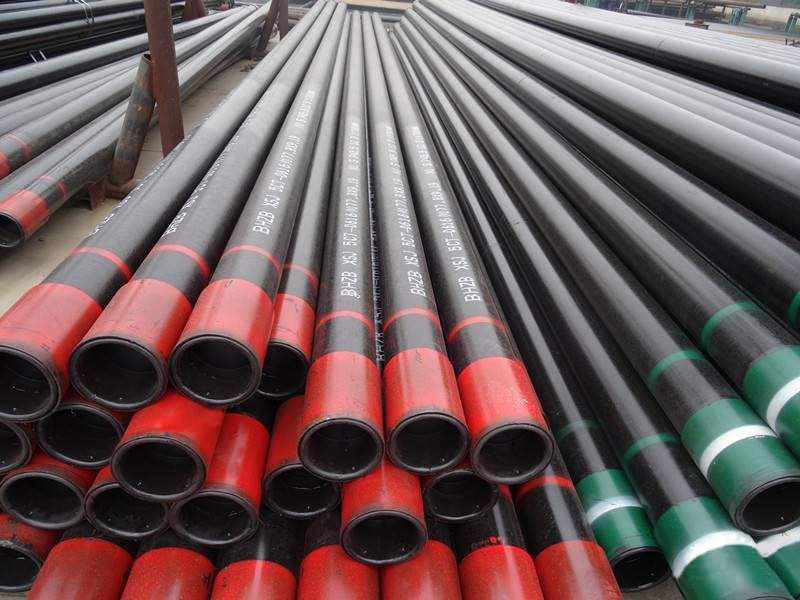
Seamless pipes are a vital component in the oil and gas sector, particularly for oil pipelines, due to their ability to withstand high pressures and temperatures. These pipes are manufactured using a process that eliminates any seams or welds, resulting in a stronger and more durable product. The manufacturing process typically involves heating a solid round steel billet and then piercing it to fo
Sep 07,2026

Seamless pipes are a vital component in the oil and gas sector, particularly for oil pipelines, due to their ability to withstand high pressures and temperatures. These pipes are manufactured using a process that eliminates any seams or welds, resulting in a stronger and more durable product. The manufacturing process typically involves heating a solid round steel billet and then piercing it to form a hollow tube, which is subsequently elongated and reduced to the desired dimensions. This method enhances the integrity of the pipe, making it less prone to leaks and failures.
One of the key advantages of using seamless pipes in oil pipelines is their superior mechanical properties. Unlike welded pipes, which can have weak points at the joints, seamless pipes offer uniform strength throughout their length. This characteristic is crucial in high-pressure environments, where any weakness could lead to catastrophic failures. Additionally, seamless pipes exhibit excellent resistance to corrosion and erosion, essential in the transportation of crude oil and other hydrocarbons that can be aggressive to materials.
Seamless oil pipeline pipes are available in a variety of grades and specifications, tailored to meet the stringent requirements of the oil and gas industry. Commonly used materials include carbon steel and alloy steel, which can be further treated to enhance their performance characteristics. Depending on the specific application, factors such as temperature, pressure, and the chemical composition of the transported materials must be considered when selecting the appropriate seamless pipe.
In terms of applications, seamless pipes are not only utilized in new oil pipeline projects but also play a crucial role in the maintenance and upgrade of existing systems. Their reliability and strength make them ideal for transporting crude oil, natural gas, and refined products over long distances. Furthermore, seamless pipes are often favored in offshore drilling and refining applications where environmental and operational challenges are significant.
When considering seamless oil pipeline pipes for a project, it is essential for professionals to conduct a thorough material selection process. This includes evaluating the specific requirements of the pipeline system, understanding the operating environment, and consulting relevant industry standards. Adhering to such guidelines ensures that the chosen seamless pipes will perform optimally and contribute to the overall safety and efficiency of the pipeline system.
In conclusion, seamless oil pipeline pipes are integral to the effective transportation of oil and gas. Their manufacturing process, mechanical properties, and resistance to environmental factors make them a preferred choice for industry professionals. By understanding the advantages and applications of seamless pipes, stakeholders can make informed decisions that enhance the performance and reliability of their pipeline systems.
One of the key advantages of using seamless pipes in oil pipelines is their superior mechanical properties. Unlike welded pipes, which can have weak points at the joints, seamless pipes offer uniform strength throughout their length. This characteristic is crucial in high-pressure environments, where any weakness could lead to catastrophic failures. Additionally, seamless pipes exhibit excellent resistance to corrosion and erosion, essential in the transportation of crude oil and other hydrocarbons that can be aggressive to materials.
Seamless oil pipeline pipes are available in a variety of grades and specifications, tailored to meet the stringent requirements of the oil and gas industry. Commonly used materials include carbon steel and alloy steel, which can be further treated to enhance their performance characteristics. Depending on the specific application, factors such as temperature, pressure, and the chemical composition of the transported materials must be considered when selecting the appropriate seamless pipe.
In terms of applications, seamless pipes are not only utilized in new oil pipeline projects but also play a crucial role in the maintenance and upgrade of existing systems. Their reliability and strength make them ideal for transporting crude oil, natural gas, and refined products over long distances. Furthermore, seamless pipes are often favored in offshore drilling and refining applications where environmental and operational challenges are significant.
When considering seamless oil pipeline pipes for a project, it is essential for professionals to conduct a thorough material selection process. This includes evaluating the specific requirements of the pipeline system, understanding the operating environment, and consulting relevant industry standards. Adhering to such guidelines ensures that the chosen seamless pipes will perform optimally and contribute to the overall safety and efficiency of the pipeline system.
In conclusion, seamless oil pipeline pipes are integral to the effective transportation of oil and gas. Their manufacturing process, mechanical properties, and resistance to environmental factors make them a preferred choice for industry professionals. By understanding the advantages and applications of seamless pipes, stakeholders can make informed decisions that enhance the performance and reliability of their pipeline systems.
Key words:


Contact
E-mail:
Add:
Hope New District, Mengcun Hui Autonomous County,
Cangzhou City, Hebei Province


PRODUCT SEARCH
Search And Quickly Find The Products You Need
The main products include oil pipeline pipes, oil casing and various specifications of GB/T8162 structural pipes, GB8/T163 fluid pipes, GB/T3087 low and medium pressure boiler pipes, G/TB5310 high pressure boiler pipes, GB/T6479 fertilizer special pipes, etc.